Human Vision for new generation of cars
Our consultant builds the next generation of 360° cameras and infotainment systems for Volvo Cars, and keeps the cars already on the road getting better.
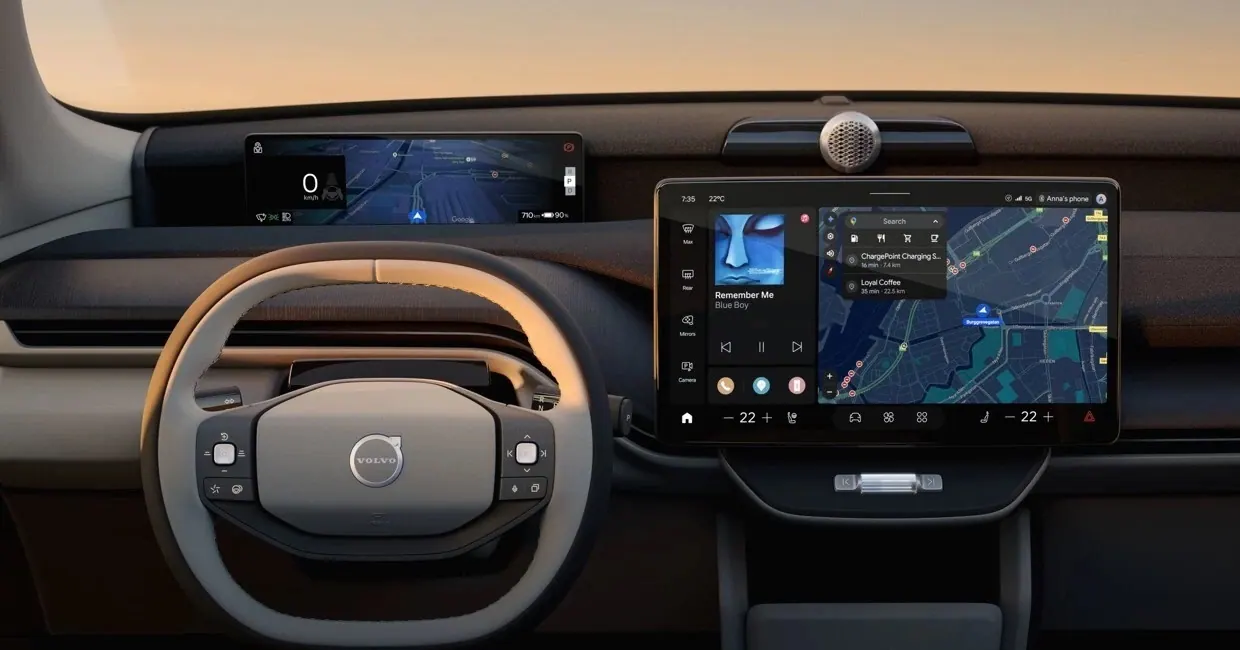
A 360° camera looks simple from the driver's seat: a bird's-eye view of the car on the centre display. Under the hood, several camera feeds are stitched together in real time, corrected for lens distortion and calibrated to the car's exact geometry. It has to be instant, accurate in the dark and the rain, and trustworthy enough that people park with it every day.
Our consultant works on that system for Volvo Cars, both on the new generation of 360° cameras and on making sure older models get updated cameras and infotainment. The stack is embedded Android (Android Automotive OS) and C++: C++ where every millisecond of the image pipeline counts, Android where the camera meets the user interface and the rest of the car.
Why it's hard. Automotive software lives under constraints most app developers never meet. It runs on fixed hardware for a decade or more, across many car models and hardware generations. It has hard real-time requirements, strict safety and regulatory demands, and every change must be validated on real hardware before it ships. Updating older cars is its own discipline: new features have to run well on processors that were designed years earlier.
Volvo has made that a priority. In early 2026 it began rolling out Volvo Car UX, a redesigned experience for around 2.5 million cars built as far back as 2020, which it calls one of the largest over-the-air updates in automotive history. Its release notes also show steady improvements to the 360° camera in existing cars.
Where it's heading. Cars are becoming software-defined: features arrive over the air, and cameras are turning from parking aids into sensors that feed driver assistance, automated parking and AI-based perception. Embedded is also the next frontier for agentic engineering. It’s harder than cloud development, because hardware context and safety constraints have to be spelled out for the agent, but the teams that learn it early will build the cars of the next decade.
“In cloud software a bug costs you a hotfix. In a car it has to be right before it ever leaves the factory, and still be improving ten years later.”